Understanding Earnest Money in Illinois: A Complete Guide for Home Buyers (2026)
Buying a home is an exciting milestone, but it also introduces many new terms and processes that can feel overwhelming—especially if you’re purchasing your first home. One of the first terms you’ll likely hear after submitting an offer is earnest money in Illinois.
Many buyers immediately ask questions like:
- What is earnest money?
- How much earnest money do I need?
- Is earnest money refundable?
- What happens if my home purchase falls through?
- Who holds the earnest money?
- Can I lose my earnest money?
These are all excellent questions, and understanding the answers can help you feel much more confident throughout the home-buying process.
At the Grant Fetter Homes Team, we believe informed buyers make confident buyers. Whether you’re buying your first home, relocating to Northern Illinois, or purchasing your forever home, understanding earnest money in Illinois is an important part of making smart real estate decisions.
If you’re purchasing a home in Crystal Lake, Cary, Wauconda, Lake Zurich, Fox River Grove, Island Lake, McHenry County, Lake County, or another Northern Illinois community, this guide explains everything you need to know.
Earnest Money in Illinois at a Glance
If you’re looking for the quick answer, here’s what every buyer should know about earnest money in Illinois:
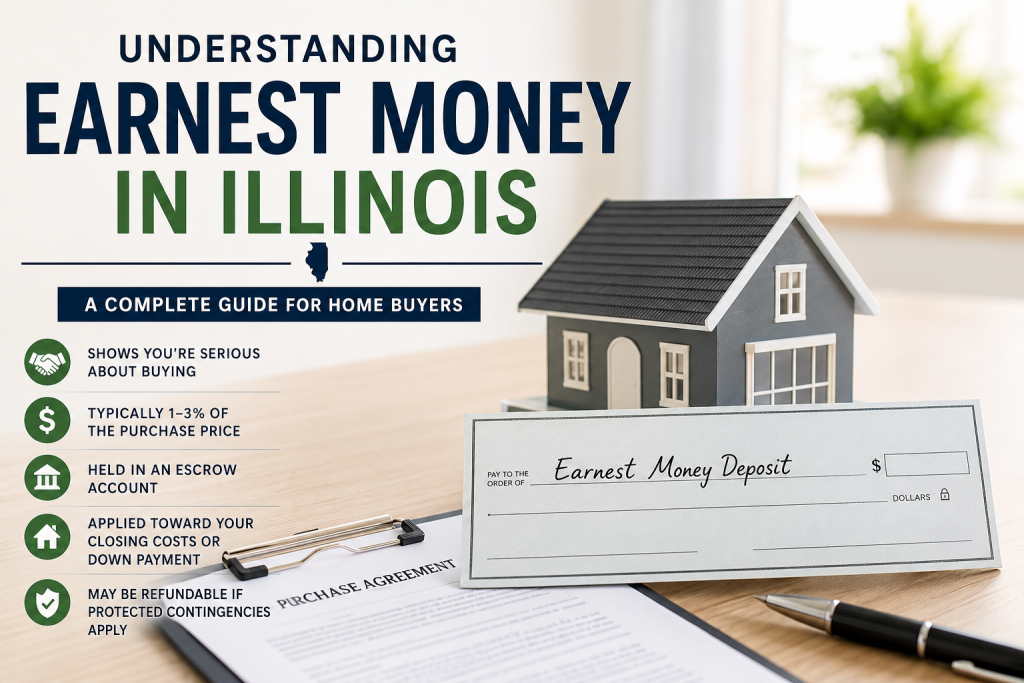
✔ Demonstrates you’re serious about purchasing the home.
✔ Typically ranges from 1% to 3% of the purchase price, although local market conditions can vary.
✔ Is held safely in an escrow account—not given directly to the seller.
✔ Is usually applied toward your down payment or closing costs at closing.
✔ May be refundable if you cancel the contract under an approved contingency.
✔ Helps strengthen your offer in many competitive real estate markets.
Now, let’s take a closer look at how earnest money in Illinois actually works.
What Is Earnest Money in Illinois?
Earnest money in Illinois is a good-faith deposit that accompanies your offer to purchase a home. It tells the seller that you’re financially committed and intend to complete the transaction according to the terms of the purchase agreement.
Think of it as saying:
“I’m serious about buying your home, and I’m willing to back up my offer with a deposit.”
When a seller accepts your offer, they generally stop actively marketing the property, decline other offers, and begin working toward closing with you. Because they’re taking their home off the market, they want reassurance that you’re committed to moving forward.
That’s where earnest money comes in.
One of the biggest misconceptions among first-time buyers is that earnest money is an additional expense.
Fortunately, that’s not the case.
In most Illinois real estate transactions, your earnest money becomes part of the money you’re already planning to pay for the home. At closing, it’s typically credited toward your down payment, closing costs, or other funds due.
Why Is Earnest Money Important?
Selling a home involves a significant amount of trust.
Once a seller accepts your offer, they’re making a commitment to work exclusively with you while inspections, financing, attorney review, title work, and other contractual obligations are completed.
During that time, they may turn away other interested buyers.
Without earnest money in Illinois, a buyer could potentially walk away without demonstrating any financial commitment.
The earnest money deposit provides reassurance that the buyer intends to follow through with the purchase.
For buyers, it also demonstrates confidence and financial preparedness.
In today’s Northern Illinois real estate market, a well-structured offer often includes a competitive earnest money deposit that helps the seller feel comfortable accepting the offer.
How Much Earnest Money Is Typical in Illinois?
One of the most common questions buyers ask is:
“How much earnest money should I put down?”
The answer depends on several factors, including:
- The purchase price
- Current market conditions
- The level of competition
- Local customs
- The strength of your overall offer
- Your real estate agent’s recommendations
There is no statewide law requiring a specific amount of earnest money in Illinois, and every transaction is unique.
However, throughout much of Northern Illinois—including Lake County and McHenry County—buyers commonly provide an earnest money deposit equal to 1% to 3% of the purchase price.
Example Earnest Money Amounts
| Purchase Price | Typical Earnest Money |
|---|---|
| $300,000 | $3,000–$9,000 |
| $400,000 | $4,000–$12,000 |
| $500,000 | $5,000–$15,000 |
| $600,000 | $6,000–$18,000 |
These are simply examples. In some situations, buyers may offer more or less depending on market conditions and negotiations.
An experienced local REALTOR® can help determine an appropriate earnest money amount based on your specific situation and the competitiveness of the market.
When Do You Pay Earnest Money in Illinois?
Another common misconception is that buyers must bring the earnest money deposit when they first tour a home.
In reality, earnest money in Illinois is generally submitted after the seller accepts your offer, according to the deadlines outlined in the purchase contract.
The exact timing will depend on the terms negotiated in your agreement, so it’s important to review your contract carefully and follow all deadlines.
Missing an earnest money deadline could create unnecessary complications or even place your contract at risk.
Your real estate agent will help ensure you understand exactly when the funds are due and where they should be delivered.
Where Does the Earnest Money Go?
Many buyers assume the seller immediately receives the earnest money.
Fortunately, that’s not how the process works.
Instead, earnest money in Illinois is generally deposited into an escrow account maintained by the brokerage, title company, or another authorized escrow holder.
An escrow account is a secure, neutral account that protects both the buyer and the seller throughout the transaction.
The funds remain safely held until one of the following occurs:
- The home sale successfully closes.
- The contract is legally terminated according to its terms.
- Both parties agree in writing on how the earnest money should be released.
This process helps ensure that neither party has access to the funds until the transaction has been properly resolved.
Why Escrow Protects Both Buyers and Sellers
Escrow plays an important role in every Illinois real estate transaction.
For sellers, it provides confidence that the buyer has demonstrated a financial commitment.
For buyers, it ensures that the earnest money isn’t simply handed over to the seller immediately. Instead, it’s held by a neutral third party until the purchase agreement has been fulfilled or otherwise resolved according to the contract.
This system helps protect everyone involved and keeps the transaction fair from beginning to end.
Can Earnest Money Help You Win a Home?
Sometimes, yes.
In competitive Northern Illinois real estate markets, sellers often receive multiple offers.
When comparing offers, they may evaluate factors such as:
- Purchase price
- Financing strength
- Closing timeline
- Inspection contingencies
- Flexibility with possession
- Overall likelihood of a successful closing
- The amount of earnest money offered
While offering more earnest money in Illinois doesn’t automatically guarantee your offer will be accepted, it can demonstrate confidence and financial readiness, which may help your offer stand out when everything else is relatively equal.
However, buyers should never feel pressured to offer more earnest money than they’re comfortable putting at risk. Your real estate agent can help you determine a strategy that balances competitiveness with your financial comfort level.
Is Earnest Money in Illinois Refundable?
This is one of the most common—and most important—questions buyers ask.
The short answer is:
It depends on why the contract is ending and what your purchase agreement says.
In many situations, earnest money in Illinois is refundable if the contract is terminated under a contingency or another provision allowed by the purchase agreement.
Real estate contracts are designed to protect both buyers and sellers, and many include contingencies that give buyers the opportunity to cancel the transaction under specific circumstances.
If those contingencies are exercised correctly and within the required deadlines, buyers are often entitled to receive their earnest money back.
Because every transaction is unique, it’s important to understand your contract and work closely with your REALTOR®, lender, and attorney throughout the process.
Common Contingencies That May Protect Your Earnest Money
Home Inspection Contingency
A home inspection gives buyers the opportunity to have the property professionally inspected before completing the purchase.
If significant issues are discovered, buyers may have options such as:
- Requesting repairs
- Negotiating a credit
- Accepting the home as-is
- Terminating the contract if allowed under the inspection contingency
Following the contract deadlines is essential to preserving your rights.
Financing Contingency
Most buyers rely on financing to purchase a home.
If a buyer is unable to obtain financing despite making a good-faith effort, the financing contingency may provide protection for their earnest money.
This contingency is one of the reasons it’s so important to get pre-approved before beginning your home search.
Appraisal Contingency
If included in the contract, an appraisal contingency may protect buyers if the property appraises for less than the agreed purchase price.
Depending on the situation, the buyer and seller may:
- Renegotiate the purchase price
- Adjust financing terms
- Increase the down payment
- Terminate the agreement if permitted by the contract
Attorney Review
Illinois is one of the few states where attorney review plays a significant role in residential real estate transactions.
During the attorney review period, attorneys for the buyer and seller may recommend modifications to the contract or, in certain situations, terminate the agreement according to its terms.
This process helps ensure buyers fully understand their rights before moving forward.
When Could You Lose Your Earnest Money?
While earnest money in Illinois is often refundable under protected circumstances, buyers can place their deposit at risk if they fail to comply with the purchase agreement.
Examples might include:
- Missing important contractual deadlines
- Failing to submit required documentation
- Walking away without a protected contractual reason
- Breaching the terms of the agreement
Every situation is different, which is why communication with your REALTOR®, attorney, and lender is so important throughout the transaction.
Fortunately, most buyers who follow the terms of their contract successfully complete the purchase without any issues involving their earnest money.
What Happens to Earnest Money at Closing?
If everything goes according to plan, your earnest money doesn’t disappear—it becomes part of your home purchase.
At closing, the earnest money you’ve already deposited is typically credited toward the total amount you owe.
Depending on your transaction, those funds may be applied toward:
- Your down payment
- Closing costs
- Other amounts due at closing
In other words, earnest money in Illinois is not an additional fee. It’s simply money you’re paying earlier in the home-buying process.
Can Offering More Earnest Money Strengthen Your Offer?
In many situations, yes.
A larger earnest money deposit can demonstrate that you’re financially prepared and committed to completing the transaction.
However, sellers evaluate much more than just the earnest money amount.
A strong offer typically considers:
- Purchase price
- Financing strength
- Type of loan
- Closing timeline
- Inspection contingency
- Flexibility
- Overall likelihood of closing successfully
Sometimes a well-qualified buyer with a slightly smaller earnest money deposit may still present the strongest overall offer.
That’s why it’s important to work with an experienced real estate professional who understands your local market.
Common Myths About Earnest Money in Illinois
Myth #1: The Seller Automatically Gets the Earnest Money
False.
The seller does not automatically receive the earnest money if the transaction doesn’t close.
How the funds are handled depends on the purchase agreement, the reason the transaction ended, and any agreements reached between the parties.
Myth #2: Bigger Is Always Better
Not necessarily.
While a larger deposit can strengthen an offer in some situations, buyers should never offer more money than they’re comfortable putting at risk.
Your REALTOR® can help you determine an amount that’s competitive without creating unnecessary financial stress.
Myth #3: Earnest Money Is the Same as a Down Payment
Not exactly.
Your earnest money is an early deposit that demonstrates your commitment to purchasing the home.
At closing, it’s typically credited toward your down payment or closing costs.
Myth #4: First-Time Buyers Don’t Need Earnest Money
This is another common misconception.
Whether you’re buying your first home or your fifth, earnest money is a standard part of many Illinois real estate transactions.
Tips for Protecting Your Earnest Money
Read Your Purchase Agreement Carefully
Every contract contains important dates and deadlines.
Understanding your obligations can help protect your earnest money throughout the transaction.
Keep Copies of Everything
Save documentation showing:
- When the earnest money was delivered
- Payment confirmation
- Escrow receipts
- Communications related to your transaction
Good documentation helps prevent misunderstandings later.
Never Miss Deadlines
Deadlines related to inspections, financing, attorney review, and other contingencies are extremely important.
Missing them could affect your contractual protections.
Work With Experienced Professionals
Buying a home involves many moving parts.
Having an experienced REALTOR®, lender, attorney, and title company working together helps keep your transaction on schedule and minimizes surprises.
Frequently Asked Questions About Earnest Money in Illinois
Is earnest money required in Illinois?
Illinois law does not require a specific earnest money amount. However, earnest money is commonly included in residential real estate contracts because it demonstrates a buyer’s commitment to completing the purchase.
Who holds the earnest money?
The earnest money is generally held in an escrow account by the brokerage, title company, or another authorized escrow holder until the transaction closes or is otherwise resolved according to the contract.
Can I lose my earnest money?
Possibly.
If you fail to comply with the purchase agreement or terminate the contract without a protected contractual reason, your earnest money may be at risk.
Always review your contract carefully and consult your REALTOR® and attorney if questions arise.
Is earnest money part of my down payment?
Yes.
In most transactions, your earnest money is credited toward the funds you’ll owe at closing, including your down payment or closing costs.
Can a Seller Reject My Offer Because of the Earnest Money Amount?
Yes.
Sellers consider many parts of an offer, including the purchase price, financing terms, contingencies, closing timeline, and the earnest money deposit. In competitive markets, a stronger earnest money deposit can help make an offer more attractive, but it is only one piece of the overall offer.
Can I Pay Earnest Money With a Personal Check?
In many Illinois real estate transactions, buyers can provide earnest money by personal check, cashier’s check, or wire transfer, depending on the contract terms and the escrow holder’s instructions.
Always follow the payment instructions provided by your REALTOR® or escrow holder to avoid delays.
Related Resources for Illinois Home Buyers
If you’re preparing to buy a home, these additional guides from the Grant Fetter Homes Team can help you better understand the process:
- What Happens During a Home Inspection? A Complete Guide for Illinois Homebuyers
- Understanding Closing Costs in Illinois
- What Is a Comparative Market Analysis (CMA) and Why It Matters
- Mortgage Pre-Approval vs. Pre-Qualification: What’s the Difference?
Exploring these topics can help you feel even more confident before submitting an offer on your next home.
Final Thoughts on Earnest Money in Illinois
Understanding earnest money in Illinois is one of the best ways to feel confident when purchasing a home.
Although the process may seem unfamiliar at first, earnest money is simply a good-faith deposit that demonstrates your commitment to buying a home. When you understand how it works, when it’s refundable, and how it’s applied at closing, you’ll be better prepared to navigate your real estate transaction with confidence.
At the Grant Fetter Homes Team, we’re committed to helping buyers throughout Lake County, McHenry County, Crystal Lake, Wauconda, Cary, Lake Zurich, Fox River Grove, Island Lake, and surrounding Northern Illinois communities understand every step of the home-buying journey.
Whether you’re purchasing your very first home or your next investment property, our team is here to answer your questions, explain the process, and help make your experience as smooth and stress-free as possible.
If you’re thinking about buying a home in Northern Illinois, we’d love the opportunity to help you navigate the process with confidence.
Disclaimer
This article is intended for general informational purposes only and should not be considered legal, financial, lending, or tax advice. Illinois real estate contracts, earnest money provisions, and escrow procedures can vary depending on the terms of the purchase agreement and the circumstances of each transaction. Buyers should consult with their REALTOR®, lender, attorney, and other qualified professionals regarding their specific situation.